
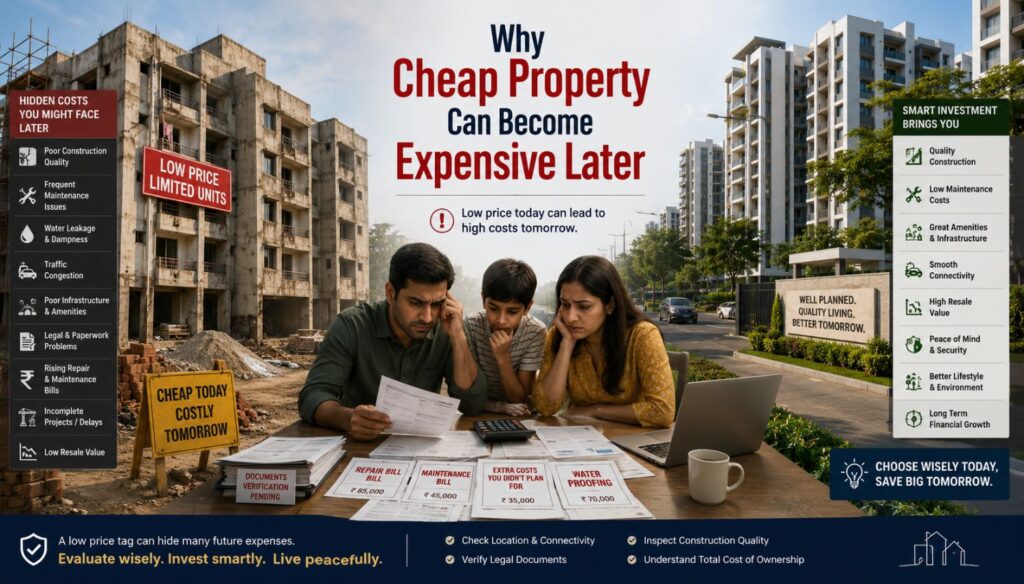
Buying a property at a low price always feels like a great deal. Many buyers think they are saving money by choosing a cheaper option.
But in reality, cheap property is not always a smart choice. Sometimes, what looks affordable at first can turn into a costly mistake later.
In this blog, we will understand why cheap property can become expensive later and what you should check before making a decision.
Low Price Often Means Poor Location
One of the main reasons a property is cheap is its location. If the area is far from the city or lacks basic facilities, prices are usually lower.
At first, this may not seem like a big issue. But over time, daily travel, lack of services, and poor connectivity can create problems.
Living in a bad location can also affect your lifestyle and comfort.
Things you may face:
- Long travel time to work
- Limited access to schools and hospitals
- Poor road connectivity
- Less safety and development
A good location may cost more, but it saves time and improves your daily life.
Hidden Costs You Don’t Notice
Cheap properties often come with hidden costs that buyers don’t think about in the beginning.
These costs may not be visible during booking, but they appear later and increase your total spending.
Common hidden costs include:
- High maintenance charges
- Extra development charges
- Parking fees
- Repair and renovation costs
When you add these expenses, the property is no longer cheap.
Poor Construction Quality
Another major reason for low pricing is poor construction quality. Some builders reduce costs by using cheaper materials or poor design.
At first, the property may look fine. But after some time, issues start appearing.
You may face problems like:
- Wall cracks
- Water leakage
- Poor fittings
- Frequent repairs
Fixing these problems costs money again and again. This makes the property more expensive in the long run.
Delay in Possession
Cheap properties are often part of projects that are still under construction. In some cases, these projects get delayed due to poor planning or lack of funds.
Delayed possession creates financial pressure on buyers. You may have to pay both rent and EMI at the same time. This adds extra cost and stress. Always check project timelines and approvals before investing.
Low Resale Value
A property is not just for living — it is also an investment. But cheap properties usually have low resale value. If the location is weak or the project is not well-known, it becomes difficult to sell the property later. You may not get good returns, or you may even face a loss. On the other hand, properties in good locations usually increase in value over time.
Lack of Basic Amenities
Cheap properties often do not offer proper amenities. Things like security, parking, lifts, and power backup may be missing or of poor quality.
This affects your daily comfort and living experience.
You may also need to spend extra money later to improve these facilities.
Basic amenities are not a luxury — they are a necessity for comfortable living.
Legal Risks and Approvals
Some low-cost properties are cheap because they do not have proper legal approvals. This can create serious problems later.
You may face issues like:
- Ownership disputes
- Project not registered under Real Estate (Regulation and Development) Act, 2016
- Delays in registration
- Problems in getting loans
Legal issues can lead to financial loss and stress. Always verify documents before buying.
Higher Maintenance in the Long Run
Cheap properties may look affordable initially, but maintenance costs can be higher over time.
Poor construction and low-quality materials lead to frequent repairs. This increases your spending year after year.
Instead of saving money, you end up spending more on maintenance.
A good quality property may cost more initially, but it saves money in the long run.
Poor Rental Demand
If you are buying property for rental income, cheap properties may not give good returns.
Tenants prefer locations with good connectivity and facilities. Properties in weak locations are harder to rent out.
This means your property may remain vacant or generate low rental income.
A well-located property attracts better tenants and stable income.
How to Make a Smart Property Decision
Instead of focusing only on price, you should look at the overall value of the property.
Here are some simple tips:
- Choose a good location
- Check builder reputation
- Verify legal approvals
- Look at long-term growth potential
- Compare multiple options
A smart decision is not about buying cheap — it is about buying right.
Conclusion
Cheap property may look attractive, but it can become expensive later due to hidden costs, poor quality, and low value. That’s why it is important to think beyond the price. Take your time, do proper research, and focus on quality, location, and long-term benefits. A well-planned investment will give you comfort and better returns in the future.
Frequently Asked Questions
1. Is buying cheap property a bad decision?
Not always, but you should be careful. Low prices may come with hidden risks like poor location or quality issues.
2. Why do cheap properties have low resale value?
Cheap properties are often in less developed areas or have poor construction, which reduces demand and resale value.
3. How can I check if a property is legally safe?
You should verify documents like title deed, approvals, and RERA registration before buying.
4. Do cheap properties have higher maintenance costs?
Yes, in many cases poor construction leads to frequent repairs, increasing long-term maintenance costs.
5. What should I focus on instead of price?
You should focus on location, quality, builder reputation, and future growth potential for a better investment.